
Selling on several channels can grow a business, but it also makes inventory harder to keep accurate. When Amazon, Walmart, and an online store each track stock separately, small delays can turn into oversold items, canceled orders, and hours of manual checking.
Understand where stock problems begin
When inventory updates happen separately across channels, the business may oversell products or spend hours reconciling orders. Delayed updates, unrecorded returns, manual adjustments, and multiple warehouses can all contribute to discrepancies. Map the flow from receiving stock through allocation, shipping, and returns.
Choose a source of truth
Decide which system owns the available inventory figure. This may be an inventory platform or order management system. Define how safety stock, pending orders, reserved units, damaged items, and stock in transit affect the quantity sent to each channel.
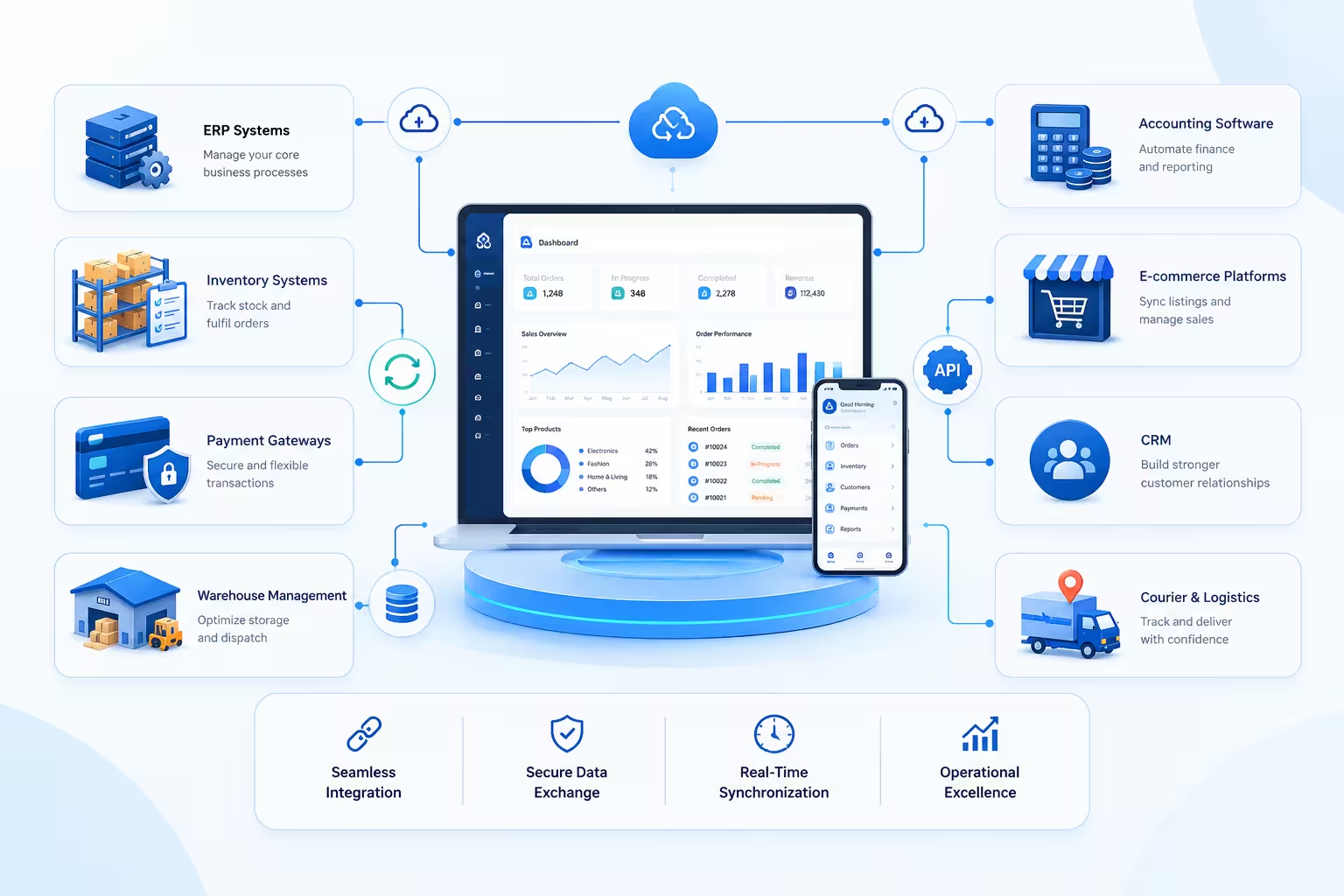
Connect order events and stock updates
An integration can collect new orders, send them to a central workflow, and update inventory when the appropriate event occurs. Cancellations, refunds, returns, and split shipments need explicit rules. Returned items should not automatically become available if they require inspection first.
Plan for integration failures
Connections can fail because of expired credentials, rate limits, or service outages. Logging, alerts, retry rules, and reconciliation reports help identify problems. Use unique order identifiers and safe processing rules to reduce the risk of duplicate orders or stock adjustments.
Roll out and measure carefully
Start with one channel or warehouse. Compare stock counts, order statuses, cancellations, and shipment records before expanding. Track stock discrepancies, overselling incidents, reconciliation time, and delays between order events and inventory updates.
Conclusion
Multi-channel operations work better when stock rules are clear and information moves reliably. Digitise Ideas helps businesses connect marketplace operations with the systems they already use. You can explore our marketplace seller services, or read how inventory and order synchronisation worked in luxury eyewear commerce and marketplace management and the unified ERP system.
FAQs
Why does stock go wrong when selling on several channels?
Each channel keeps its own view of stock. Without one agreed figure behind them, the same unit can be sold twice and inventory stops being trustworthy.
What is a source of truth for inventory?
The single system whose stock figure every channel follows, so conflicts are resolved the same way every time instead of per channel.
Do we have to stop selling on a channel to fix this?
No. The channels stay where they are and are connected to the source of truth, so you keep selling where your customers already shop.
Have a process or software challenge you want to improve?
Contact Digitise Ideas to discuss a practical next step.